
Statistical Frameworks · Portfolio Construction

Dr. Heiko Bailer — Quantitative Investments & Portfolio Architecture

Causal investment frameworks — from published research to institutional portfolios engineered for alpha across sustainable factor investing, regime-aware allocation, and structural risk.

Professional portrait of Dr. Heiko Bailer, Ph.D., quantitative investment researcher and portfolio architect

Heiko Bailer is a senior investment executive, applied statistician, and researcher with more than 20 years of experience across asset management, private banking, family offices, and institutional investment platforms.

His work connects quantitative research with live portfolio construction, asset allocation, risk governance, and implementation. At LBBW Asset Management, he built systematic investment frameworks across equities and fixed income.

His research has appeared in The Journal of Portfolio Management, The Journal of Beta Investment Strategies, and The Journal of Impact and ESG Investing — while his regime-risk-stability research has been accepted by The Journal of Financial Data Science.

20+ Years Institutional Investing · Global Innovation Award 2026 · Research Published in Leading Investment Journals

Research ProgrammesI / II

Two connected research programmes.

The research addresses two portfolio-construction questions: how investors can pursue measurable sustainability outcomes without compromising the investment engine, and how portfolios can adapt when regimes, risk conditions, and structural relationships change.

Chart of the sustainability-constrained efficient frontier, illustrating how portfolio construction can jointly optimize sustainability KPIs and risk-adjusted returns
Fig. I — Sustainability-constrained frontier
Research Programme I

Factor-Based Portfolio Construction

Optimize sustainability and performance together. Preserve the investment engine.

Sustainability is treated as a measurable portfolio-construction objective—not as a list of exclusions or a concession on returns.

The framework jointly optimizes sustainability KPIs and performance disciplines, steering capital toward better outcomes while preserving factor exposures, diversification, and risk-adjusted performance.

  1. 01MEASURABLE OBJECTIVES Translate sustainability KPIs into explicit portfolio-construction targets.
  2. 02PORTFOLIO STEERING Move beyond blunt exclusions by optimizing toward better outcomes.
  3. 03PERFORMANCE DISCIPLINE Control unintended factor, concentration and risk biases.
Research in Practice

From a published biodiversity factor to a live, award-winning fund.

The biodiversity factor introduced in the Journal of Beta Investment Strategies research was translated into the systematic investment approach behind the LBBW Biodiversität Fund -- whilst meeting strict compliance with German regulations. The live implementation provides a direct example of research moving from factor design into an investable portfolio.

Official LBBW Fund Page
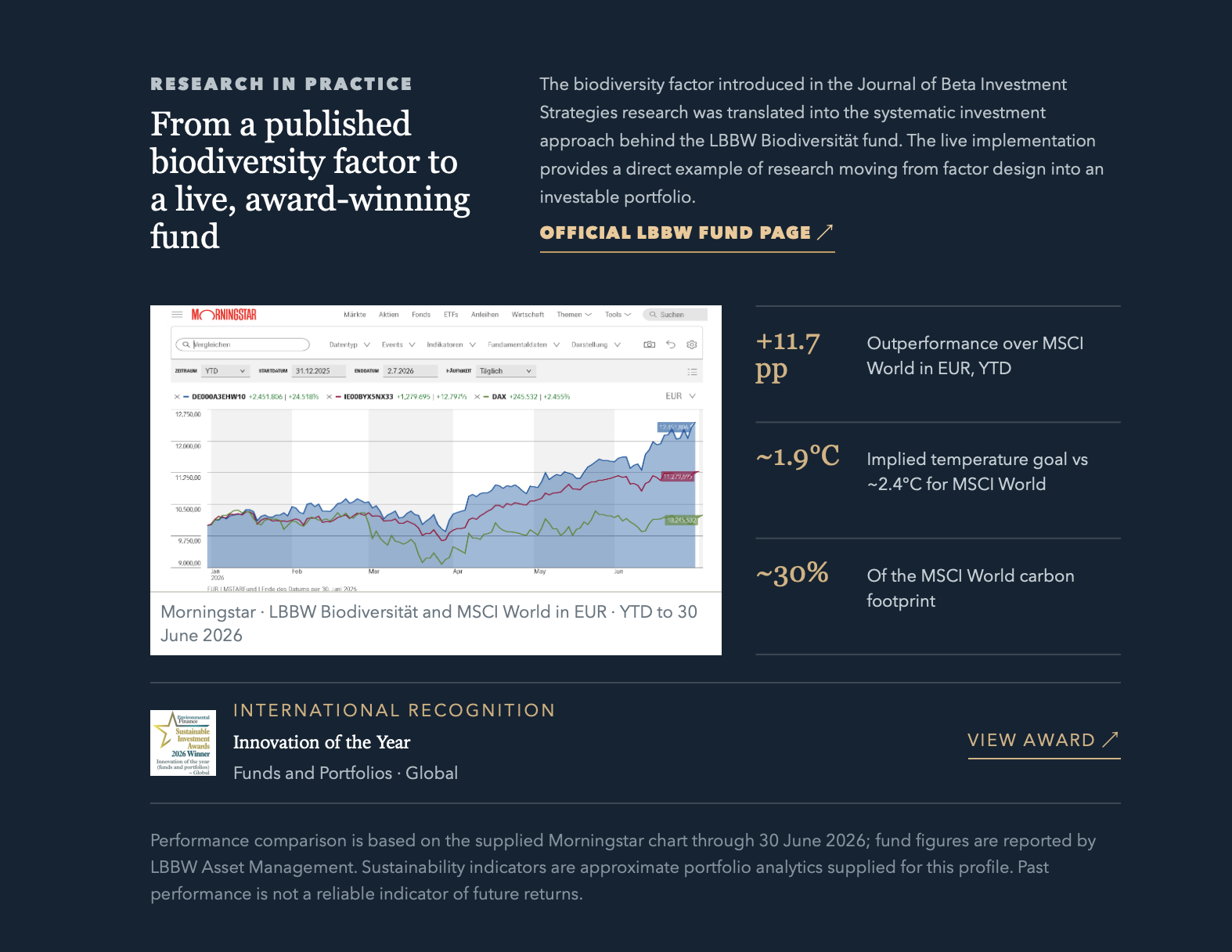
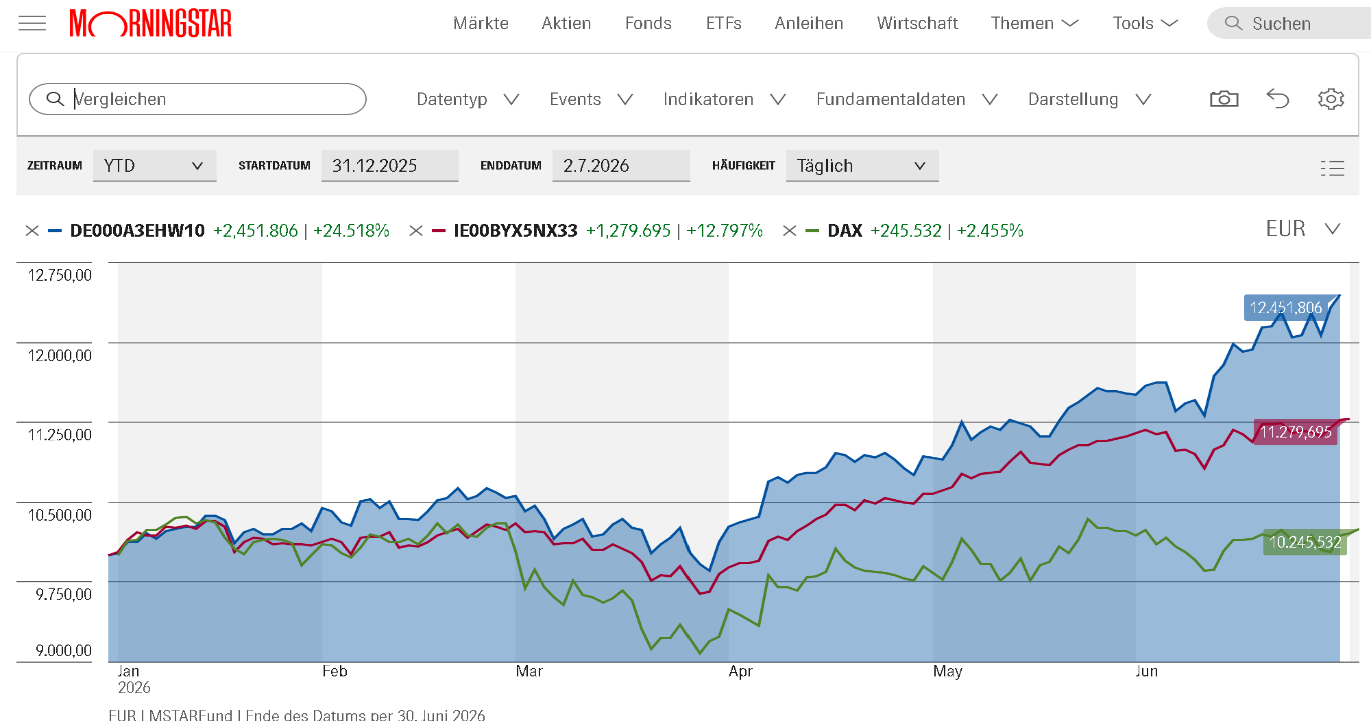
Morningstar chart comparing LBBW Biodiversität fund against MSCI World and DAX in EUR, YTD to 30 June 2026
Morningstar · LBBW Biodiversität and MSCI World in EUR · YTD to 30 June 2026
+11.7 pp
Outperformance over MSCI World in EUR, YTD
~1.9°C
Implied temperature goal vs ~2.4°C for MSCI World
~30%
Of the MSCI World carbon footprint
International Recognition · 2026

Innovation of the Year

Environmental Finance Sustainable Investment Awards · Funds and Portfolios · Global

Performance comparison is based on the supplied Morningstar chart through 30 June 2026; fund figures are reported by LBBW Asset Management. Sustainability indicators are approximate portfolio analytics supplied for this profile. Past performance is not a reliable indicator of future returns.

Selected Research

Selected Research

Published research and current work across factor-based portfolio construction and regime-aware asset allocation.

Factor-Based Portfolio Construction

  1. 2026

    [01]

    Journal Article

    Bailer, H. (2026). Smarter Beta Investing: More Focus, Less Sustainability Bias, Same Performance.” The Journal of Portfolio Management — Special Issue on Factor-Based Investing.

    Demonstrates how factor strategies can be replicated and sharpened while correcting their negative sustainability biases and preserving factor exposures and Sharpe ratios.

    Cover: The Journal of Portfolio Management

    DOI: 10.3905/jpm.2025.1.785

    Read Publication
  2. 2025

    [02]

    Journal Article

    Bailer, H. (2025). Smarter Beta Investing: Dollar-Neutral, Less Beta, More Performance with Traditional and Sustainable Factors.” The Journal of Beta Investment Strategies.

    Examines sustainable factors alongside traditional investment factors in a market-neutral framework, with a focus on reducing beta and improving the portfolio's risk-return structure.

    Cover: The Journal of Beta Investment Strategies

    DOI: 10.3905/jbis.2025.1.082

    Read Publication
  3. 2025

    [03]

    Journal Article

    Bailer, H. (2025). Smarter Beta Investing: Forget Exclusions, Add Steering toward Lower Emissions.” The Journal of Impact and ESG Investing.

    Shows how optimization-based steering toward lower emissions can avoid the concentration and unintended size biases associated with exclusion-based approaches while maintaining or improving risk-adjusted returns.

    Cover: The Journal of Impact and ESG Investing

    DOI: 10.3905/jesg.2025.1.135

    Read Publication
  4. 2024

    [04]

    Book Chapter

    Bailer, H. (2024). Optimizing Sustainable Performance: A Strategic Approach to Value Creation and Impactful Investing.” Sustainable Investing: Problems and Solutions.

    Establishes the strategic foundation for integrating sustainability objectives into investment and value-creation decisions.

    Book cover: Sustainable Investing: Problems and Solutions

    Link

    Read Publication
01 / 04

Regime, Risk & Structural Stability

  1. 2026

    [05]

    Working Paper

    Bailer, H. (2026). Risk Appetite and Structural Instability Across Fixed-Income Markets: A Common Risk-State Framework Across Equity–Bond Correlation Regimes.” SSRN.

    Shows that the value of a common risk-appetite signal across fixed-income markets depends on economic exposure and the prevailing equity–bond correlation regime, while asset-specific structural stability provides a distinct local risk control.

    SSRN working paper cover image with solar panels

    SSRN:

    Read Publication
  2. 2026

    [06]

    Journal Article·Accepted

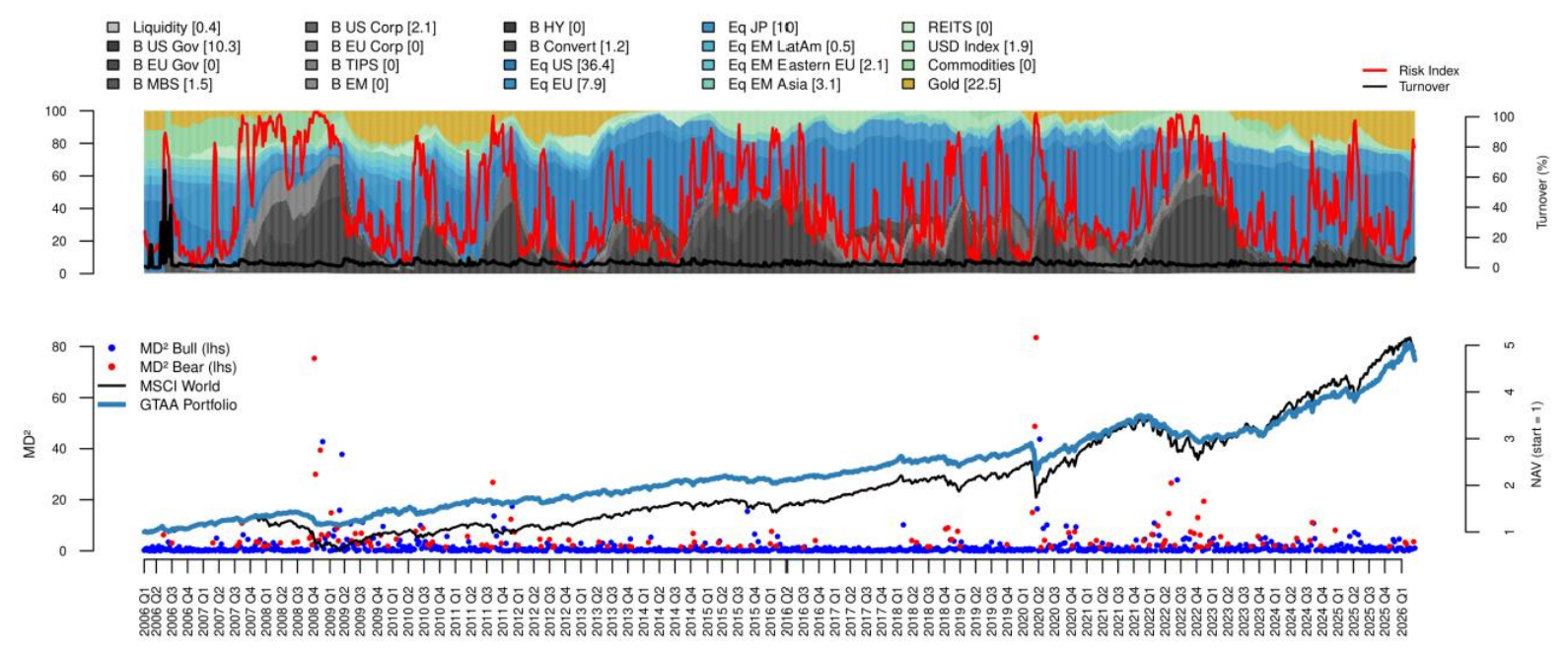
    Bailer, H. (2026). A Causal Regime-Risk-Stability Framework for Global Tactical Asset Allocation.” The Journal of Financial Data Science.

    Integrates regime identification, forward-looking risk conditions and structural-stability diagnostics into a low-parameter portfolio decision architecture designed for institutional asset allocation.

    Cover: The Journal of Financial Data Science

    SSRN: 6107187

    Read Publication
  3. 2011

    [07]

    Book Chapter

    Bailer, H. (2011). Robust Betas in Asset Management.” The Oxford Handbook of Quantitative Asset Management.

    Co-authored with Tatiana A. Maravina and R. Douglas Martin. Develops robust exposure estimates designed to remain useful when conventional beta measures become unstable.

    Book cover: The Oxford Handbook of Quantitative Asset Management

    Link

    Read Publication
  4. 2011

    [08]

    Research Monograph

    Bailer, H. (2011). Long Term Statistical Analysis of US Asset Classes.” RMetrics Association & FinanceOnline Publishing.

    Provides the long-term statistical research foundation and the early structural-stability measures on which the later regime-risk-stability framework builds.

    Cover: Long Term Statistical Analysis of US Asset Classes

    SSRN: 4866751

    Read Publication
01 / 04

The two research programmes are connected by a common objective: building portfolios that pursue explicit investment outcomes while remaining robust to unintended exposures, changing risks and unstable market relationships.

The summaries above reflect the published abstracts: the JPM work emphasizes correcting sustainability biases while preserving factor tilts and Sharpe ratios; the emissions paper contrasts steering with exclusions; and the JFDS paper combines regimes, risk conditions and structural stability. (SSRN)

Current Research

Extending the Architecture

IN DEVELOPMENT

Risk Appetite and Stability across Fixed-Income Markets

This module applies the common regime-risk-stability architecture across major fixed-income segments. It examines where a shared risk-appetite state materially improves allocation and drawdown control, and where defensive bond segments should instead serve as controls.

Fixed IncomeRisk AppetiteStructural StabilityDrawdown Control
IN DEVELOPMENT

A Common Regime-Risk-Stability Architecture across Asset Classes

This cross-asset research extends the framework across broad global asset classes. It tests whether one coherent set of regime, risk and stability rules can improve portfolio resilience without asset-specific parameter optimization.

Cross-AssetGTAACommon RulesPortfolio Resilience

The regime-risk-stability architecture is now being extended from portfolio-level GTAA to the behavior of individual asset classes.

The objective is not to forecast every market movement. It is to establish when portfolio risk is supported by the prevailing regime and when instability requires greater caution.

Contact

Research, Investment Architecture & Strategic Collaboration.

For institutional investment research, systematic portfolio construction, asset-allocation frameworks or investment-platform development, please connect through LinkedIn or email.